Jesus Accepted Worship
The One Word That Triggered Outrage
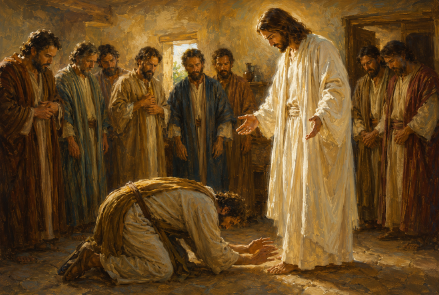
“My Lord and my God!”
A few days ago I received a
phone call from a man asking if I could answer a question about a Scripture
passage.
“How can I help you with
that?” I asked.
From that point on, I
couldn't get a word in. The man aggressively accused me of being a false teacher
for claiming that Jesus is Jehovah.
I tried slowing down the
conversation so I could answer his concern and explain why I believe that, but
he would have none of it. Finally, I said, “Jesus accepted worship.”
At that, he exploded into a
tirade of words.
“There’s no Scripture
that says that!”
“Of course there is. Let
me show you,” I interjected.
His shouting became
increasingly hostile and incoherent, and eventually he hung up the phone.
That one word, worship,
triggered outrage, because he understood its implications. Yet throughout the
New Testament Scriptures, we repeatedly find people worshiping Jesus, and He
never rebuked them for doing so. In contrast, the Apostle Peter and angels
refused receiving worship (Acts 10:25–26; Revelation 22:8–9).
The Greek word for worship,
proskuneó, means to worship, to bow down, or to prostrate oneself. From
this root word come related forms*. The differences come from grammar and
sentence structure, much like our English words worship, worshiping, worshiped,
or acts of worship—singular and plural. It is important to note that the New
Testament does not use a lesser form or lesser tense of the word proskuneó of
worship when directed toward Jesus.
Let’s look at some of
these worship verses directed toward God and Jesus.
Worship Toward GOD
“God is spirit, and His
worshipers (proskynountas) must worship (proskynein) in spirit and truth.” —
John 4:24
“Away from Me, Satan!”
Jesus declared. “For it is written: ‘Worship (proskyneseis) the Lord your
God’” — Matthew 4:10
“You shall worship (proskyneseis)
the Lord your God” — Luke 4:8
“And all the angels stood
around the throne and they fell on their faces before the throne and worshiped (prosekynesan)
God.” — Revelation 7:11
“The twenty-four elders
fell on their faces and worshiped (prosekynesan) God.” — Revelation 11:16
Worship Toward JESUS
“A leper came and
worshiped (prosekynei) Him [Jesus], saying, ‘Lord, if You are willing, You can
make me clean.’” — Matthew 8:2
“While He [Jesus] was
saying these things to them, a synagogue official came and bowed down (prosekynei)
before Him, and said, ‘My daughter has just died; but come and lay Your hand
on her, and she will live.’” — Matthew 9:18
“Then those who were in
the boat worshiped (prosekynesan) Him [Jesus].” — Matthew 14:33
“But she came and
worshiped (prosekynei) Him, pleading again, ‘Lord, help me!’” — Matthew
15:25
“Then the mother of the
sons of Zebedee came to Jesus with her sons, bowing down (proskynousa) and
making a request of Him.” — Matthew 20:20
“Then he (the man who had
been born blind) said, ‘Lord, I believe!’ And he worshiped (prosekynesen)
Him.” — John 9:38
After the resurrection:
“And behold, Jesus met
them (the women) and said, ‘Rejoice!’ And they came up took hold of His
feet, and worshiped (prosekynesan) Him.” — Matthew 28:9
“And when they (the
disciples) saw Him they worshiped (prosekynesan) Him, but some doubted.” —
Matthew 28:17
After doubting the
resurrection, and then seeing the risen Christ, Thomas the Apostle declared the
confession believers have echoed throughout the centuries: “My Lord and my
God!” — John 20:28
At Jesus’ ascension:
“Then they worshiped (proskynesantes)
Him and returned to Jerusalem with great joy.” — Luke 24:52
The testimony of Scripture does not end with individual people worshiping Jesus. The prophets looked forward to the day when all creation would acknowledge Him.
Through Isaiah, the LORD declared:
"There is no other God but Me, a righteous God and a Savior; there is none besides Me... To Me every knee shall bow, every tongue shall swear allegiance" (Isaiah 45:21–23).
Notice that the LORD identifies Himself as God and Savior, then declares that every knee will bow before Him.
The Apostle Paul applies this very passage to Christ.
"For to this end Christ died and lived again, that He might be Lord both of the dead and of the living... For it is written: 'As surely as I live,' says the Lord, 'every knee will bow to Me, and every tongue will confess to
God'" Romans 14:9–11.
Paul then makes the connection unmistakable in Philippians 2:6–11:
"...Though He was in the form of God... God highly exalted Him... so that at the name of Jesus every knee should bow... and every tongue confess that Jesus Christ is Lord, to the glory of God the Father."
The One before whom every knee bows in Isaiah is the very One before whom every knee bows in Philippians. The worship Jesus received during His earthly ministry anticipated the day when every creature will bow before Him and confess that Jesus Christ is Lord.
The issue ultimately comes down to the identity of Jesus. He is God, the Word made flesh (John 1:14). If He were merely a man, accepting worship would have been blasphemy. Yet throughout the New Testament, Jesus receives worship without correction because He is far more than a prophet, a teacher, or an angel. He is Emmanuel, “God with us”!
Question
Since the Gospel writers used the same Greek worship language for both God and
Jesus, what do you think they were intending their readers to understand about
Jesus' identity?
Leave your comment: info@sundayschoolnetwork.com
Copyright 2026 S.A. Keith
* https://biblehub.com/greek/4352.htm
proskynountas, proskyneseis, prosekynesan,
prosekynesen, proskynetai, prosekynei, proskynousa, proskynein, and
proskynesantes.
You can make a
difference!
Your donation
to the site helps us distribute our
children's ministry resources to churches across the world.
Subscribe to our Newsletter - Learn More
Return to the Adult and Teen Devotionals page.
